
The e-commerce world is growing constantly and changing fast, driven by technological innovation and by new consumer needs. By 2026, this sector will be revolutionised by factors that will profoundly change the way we buy online. For companies, adapting to this evolving landscape is essential to stay competitive in an increasingly dynamic market. So what lies ahead? Let’s find out together.
Hyper-advanced personalisation: the user experience at the centre
Personalisation is nothing new in the e-commerce world; however, over the coming years it will be strengthened to give users shopping experiences tailored down to the detail.
With a more targeted use of artificial intelligence technologies, it will be possible to anticipate customers’ needs and wishes to a greater extent, offering personalised recommendations in real time.
Customer profiling will be even more detailed, based on behavioural and emotional data and on individual preferences.
We will also see a dynamic adaptation of e-commerce sites to user behaviour, with changes to content and layouts to offer an increasingly unique user experience.
The companies that manage to make use of these technologies will be able to build customer loyalty by offering customers exactly what they need, at the right moment.

Total immersion: augmented reality and the metaverse
E-commerce is entering a new dimension thanks to the immersive experiences offered by the metaverse and by augmented reality. In particular, virtual shops in the metaverse will let customers explore products in realistic environments and interact with brands in an innovative way.
Augmented reality will allow them to try products, such as clothing or furniture, directly from home, placing them in their own surroundings, and new multisensory experiences will increase emotional engagement.

Towards an ever more integrated sustainability
Over the coming years sustainability will be firmly at the centre of e-commerce strategies. Consumers, who are increasingly attentive to the environmental and social impact of their purchasing choices, will favour:
- Transparent supply chains: where do the products come from? Under what conditions were they made? Companies will have to guarantee total transparency and traceability to meet these needs.
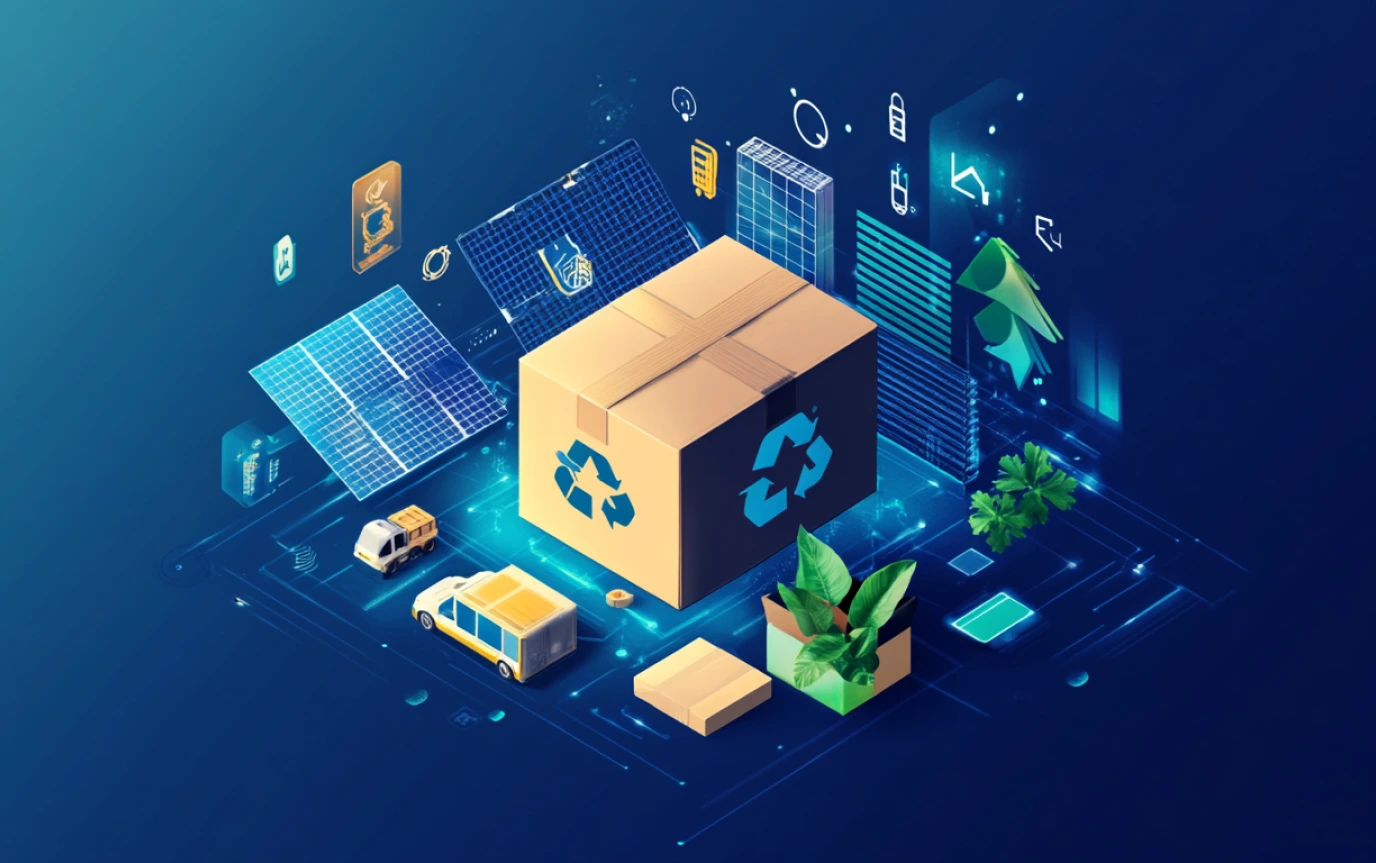
- Eco-friendly packaging: the use of recycled, biodegradable and zero-waste materials will become a standard for shipments, which keep growing.
- Circular economy: durable, recyclable and repairable products will drive the evolution of the market, reducing waste and promoting responsible models of consumption.
Adopting sustainable practices will not only be an ethical choice, but a real winning market strategy for earning consumers’ trust.
“Social commerce” and conversational commerce
Social media already play an important role in the world of online shopping but, thanks to more interactive features, they will strengthen their leverage over consumers.
There is also talk of conversational commerce which, with virtual assistants as the protagonists of online selling, will bring a rapid change in the way customers interact with brands. Customers will be able to place orders and receive immediate assistance directly through virtual assistants. Companies will increase the speed and quality of their service, building relationships of trust with their customers.
Faster checkout and payments
The simplicity and security of the payment process will play a key role in improving the user experience and reducing cart abandonment.
Among the breakthroughs in the field of biometric payments, technologies such as facial and fingerprint recognition will lead the way, making online payments faster and more secure. One-click checkouts will let customers complete a purchase smoothly, cutting times and improving conversion.
The world of cryptocurrencies and blockchain will make great strides, allowing faster international payments with no additional costs.
Optimising logistics and the supply chain
As online purchases increase, logistics will have to adapt its procedures to guarantee fast and efficient deliveries, through:
- Ultra-fast deliveries through same-day shipping options or shipping within a few hours.
- Smart warehouses which, with automation and robotics, will optimise order management, reducing errors and waiting times.
- Sustainability in logistics with the adoption of eco-friendly means of transport and low environmental impact delivery models.
How to prepare for the future of e-commerce?
To deal successfully with the changes expected over the coming years, companies will have to invest in innovation and adopt customer-oriented strategies. But how exactly?
-
Embrace new technologies through the integration of AI, AR, VR and blockchain to intercept the customer’s needs
-
Analyse data effectively through data analysis, to anticipate customers’ needs and personalise the offer.
-
Focus on sustainability with the adoption of responsible practices that reflect consumers’ values.
-
Optimise the customer experience by making every stage of the purchase simple, fast and secure.
The companies that manage to ride the trends we have described, adopting targeted strategies, will be able not only to prosper, but also to help create a more innovative, inclusive and sustainable business for the future.
Do you have a business idea that involves adding an e-commerce site? As you will know, every e-commerce site worth its name has a management system, which lets it optimise every step. Do you want to know how?
Contact our team, we are ready to support you with cutting-edge technological solutions to meet tomorrow’s challenges successfully!