
What is the difference between a CTO, a CIO and a CDO?
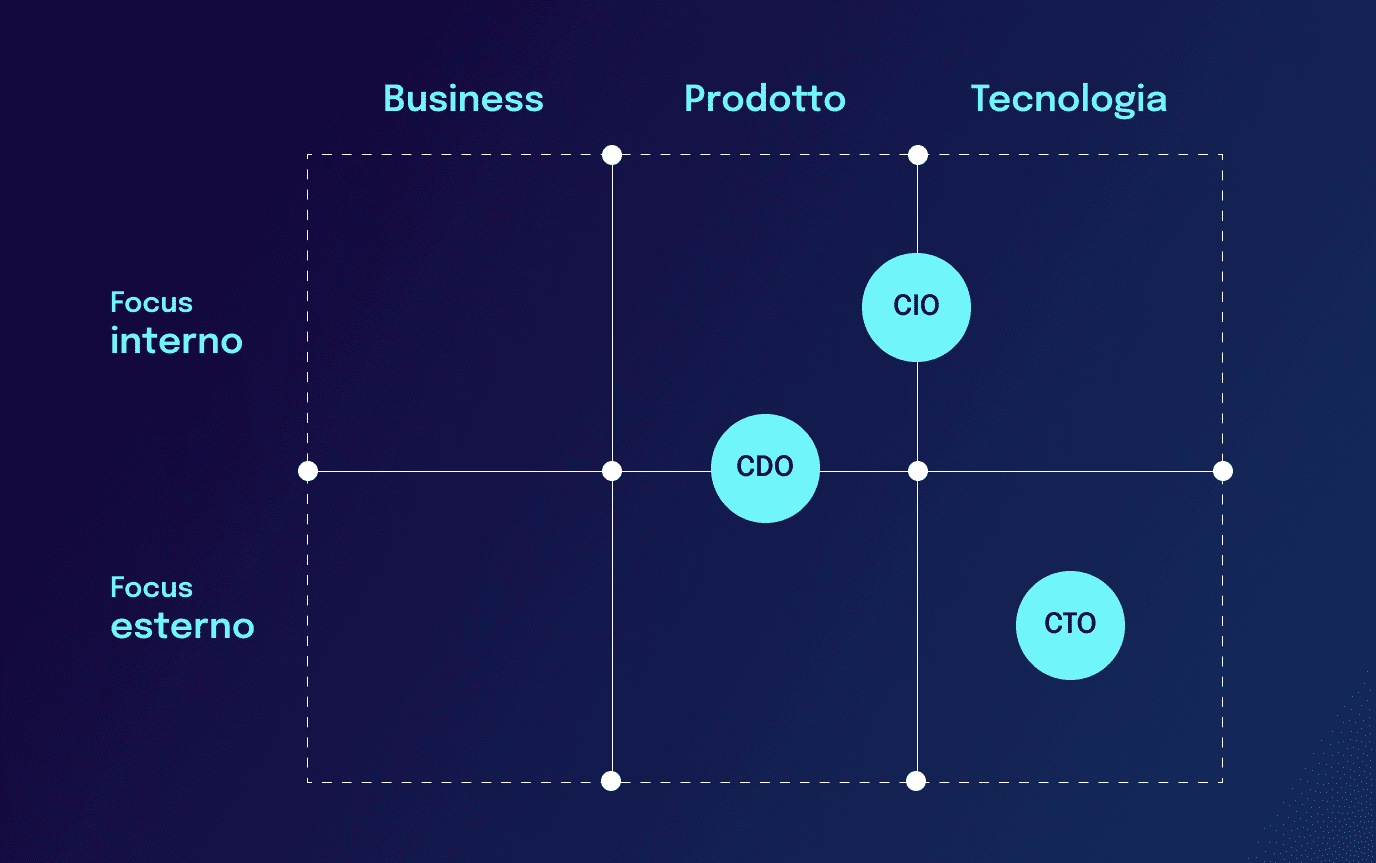
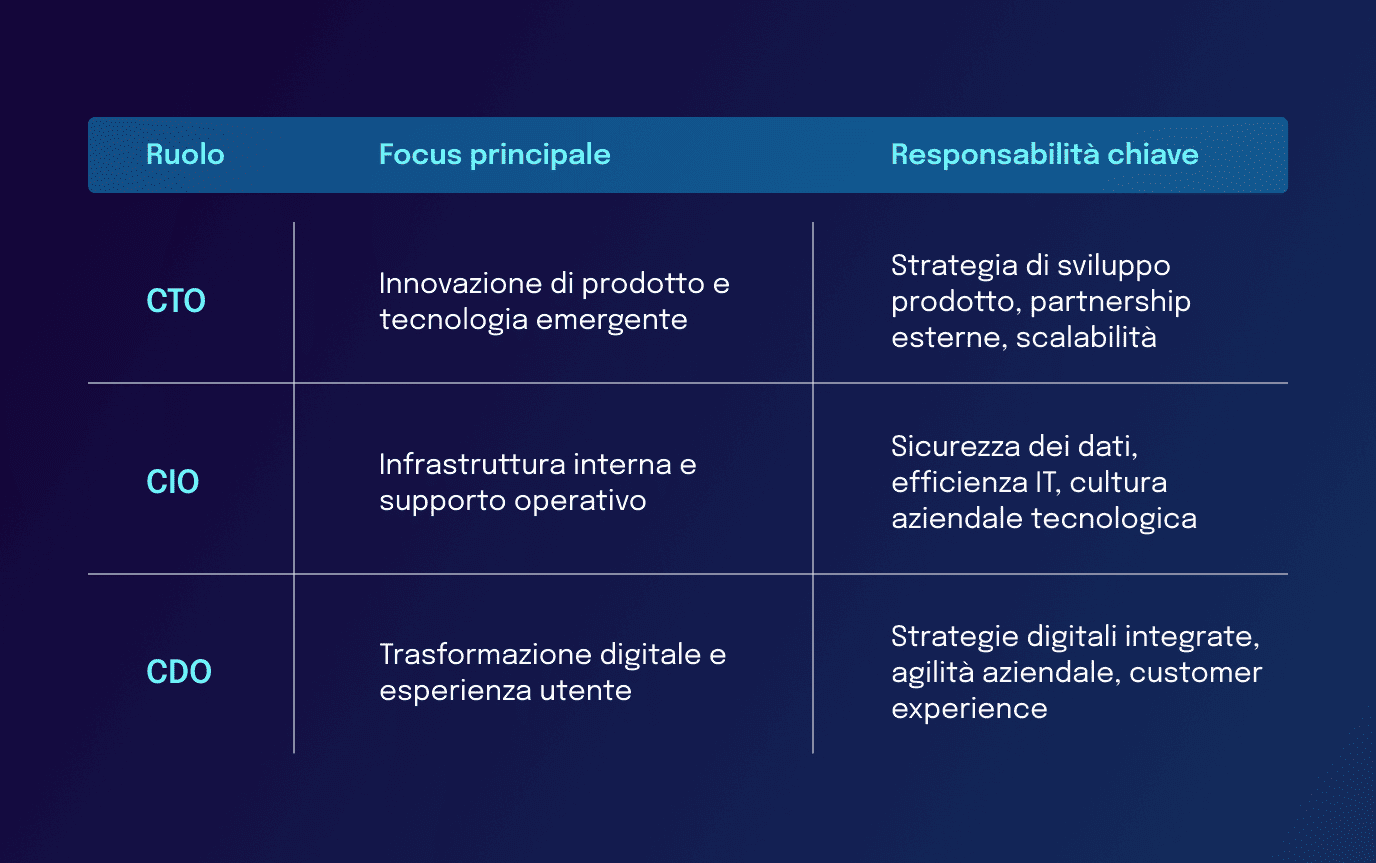
CTO, CIO and CDO are three distinct roles, and the difference is where they look. The CTO looks outwards: emerging technologies and product strategy, technology as a lever to compete. The CIO looks inwards: IT infrastructure, cyber security and technology support for processes. The CDO brings digital into the company strategy and works on the customer experience.
As digital transformation advances, technology leadership roles have evolved to reflect the new needs of companies. Tech officers are the pillars of technology leadership, each with unique and complementary responsibilities. If you are wondering why we speak in the plural, it is because today we will explain the strategic roles of no fewer than 3 figures: CTO, CIO and CDO. Traditionally we hear much more often about the CTO alone, but let’s take a closer look at the specific functions and the strategic value that these other figures bring.
Tech officers CTO, CIO and CDO: who does what?
Within technology leadership, the roles of Chief Technology Officer (CTO), Chief Information Officer (CIO) and Chief Digital Officer are crucial but distinct. Traditionally, a CTO focuses on emerging technologies and on product strategy, a CIO on internal technology, while the CDO navigates the digital landscape.
The CTO: the architect of the product’s technology
The Chief Technology Officer deals mainly with product innovation and with identifying and adopting emerging technologies to improve products and increase the company’s competitiveness. The CTO’s focus is “external”, in that it aims to use technology as a competitive advantage.
Key skills of a successful CTO:
-
Strategic thinking and design thinking: understands the customer’s needs and knows how to adapt technology to meet them. Cultivates relationships with external partners, such as universities and start-ups, to keep the company at the cutting edge.
-
Continuous updating: the CTO must always be up to date on the latest innovations and technology trends.
-
Ability to challenge the status quo: is able to recognise and promote new technological solutions even when they require breaking with the company’s existing conventions.
Every CTO develops their own style according to the sector and the company culture: some focus on continuous innovation, while others adopt a more pragmatic style, facilitating the adoption of technologies that are already mature and stable.
The CIO: a true guardian of internal IT efficiency
Unlike the CTO, the Chief Information Officer has an internal and strategic focus, being responsible for the company’s IT infrastructure, for cybersecurity and for technology support for processes. Initially, the CIO was seen as the supervisor of basic information technology; today the role is that of a true strategic leader, who balances technology operations with business needs.
New functions of the CIO:
-
Business leader: as well as managing IT operations, has a thorough understanding of the business and knows how to spot opportunities for growth through technology.
-
Agent of change: actively supports innovation and promotes a technology culture in the company.
-
Talent scout: recruits and develops the best IT talent, helping to build agile and competitive teams.
-
Tech translator: communicates effectively with top management, making the implications of technology easier to understand and fostering a data-driven company culture.
The CDO: a digital transformer
Unlike the CTO, the Chief Information Officer has an internal and strategic focus, being responsible for the IT infrastructure of the company, for cybersecurity and for technology support for processes. Initially, the CIO was seen as the supervisor of basic information technology; today the role is that of a true strategic leader, who balances technology operations with business needs.
Strategic responsibilities of the CDO:
-
Integration into the company strategy, rather than being limited to a separate digital strategy
-
Customer-centred approach, developing technological solutions to improve the user experience, with tools such as real-time reports and innovative interfaces.
-
Agility and speed in creating a “digital spirit” in the company, bringing speed into processes and setting challenging goals.
-
Creation of external networks to maintain relationships with external partners and start-ups, keeping pace with innovations in the sector.
-
Execution and delivery by steering the company towards transformation, to encourage a long-term vision.
The key differences between the tech officers CTO, CIO and CDO
How CIO, CTO and CDO collaborate strategically
For these three figures to thrive and contribute to the company’s growth, the support of the company’s CEO is needed. In this way, their collaboration can translate into:
- A clear mandate and long-term support to understand the importance of digital transformation and ensure that there are sufficient resources for the success of every initiative.
- Strategic alignment with the CEO, who must make sure that the company’s goals are understood and shared among CTO, CIO and CDO, fostering a collaborative culture.
- Attracting the right talent: promoting an engineering culture that attracts the best tech talent.
Tech officers: a strategic team for the company’s competitiveness
The roles of CTO, CIO and CDO are crucial for the modern digital company, each with distinctive skills and a precise area of influence. Awareness of this on the part of leadership teams is fundamental for establishing diversified criteria of success.
Understanding and making the most of the collaboration between tech officers, while guaranteeing a favourable environment, is essential to allow the company to face the ever greater challenges of the digital market, positioning itself competitively in its own sector.
Don’t miss our updates on the tech world! Take a look at the other articles on the dotenv Blog!