In the landscape of modern technology, two emerging concepts are the pillars of digital transformation: cloud computing and edge computing. These two forms of data processing are distinct but complementary approaches to managing and processing information.
Today we want to compare cloud and edge computing, offering you definitions, features, differences and applications of these two concepts.
Cloud computing: maximum sophistication and computational capacity
Cloud computing is the paradigm in which all the resources of a system are centralised on a network. It is an approach that has revolutionised the way we store, process and access data, offering scalability, flexibility and on-demand resources through access to powerful remote data centres.
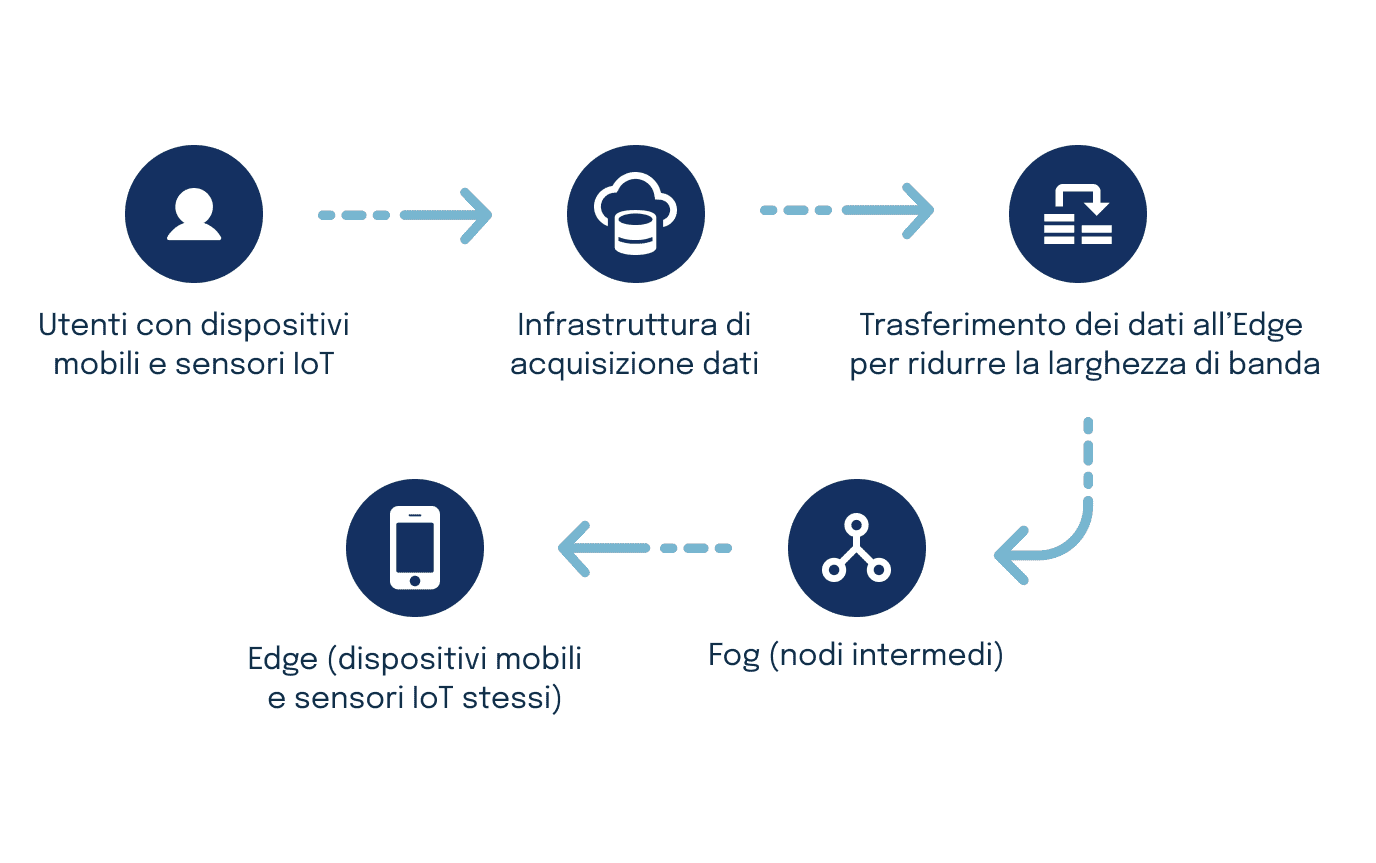
When a cloud architecture is used, data is typically generated by users with mobile devices and by IoT sensors. Then, a data acquisition infrastructure collects this information and transfers it to the cloud for processing, analysis and delivery back to consumers, who may be a considerable distance from the location of the cloud. However, transferring this large amount of data from IoT and mobile devices to the cloud requires considerable bandwidth. To tackle this challenge, fog computing and edge computing have been proposed, two new paradigms that aim to move computation closer to the producers and consumers of the data. We therefore go from the “cloud” of the Cloud (such as AWS, for example) to the “light mist” of the Fog (nodes), down to the “edge” of the Edge (the devices themselves).
Edge computing: minimum computational capacity, minimum latency
Edge computing is a model that moves computation and data processing closer to the point where the data is generated, instead of relying exclusively on remote data centres (as in traditional cloud computing). This approach pushes the data processing paradigm to the extreme, so instead of having millions of micro data centres, you have billions of devices carrying out simple data analysis. We therefore go from the Cloud, which offers maximum sophistication and computational capacity but also maximum latency, to the Edge, which provides minimum computational capacity but also minimum latency, improving performance, above all in real-time applications such as IoT.
Comparison between cloud and edge computing
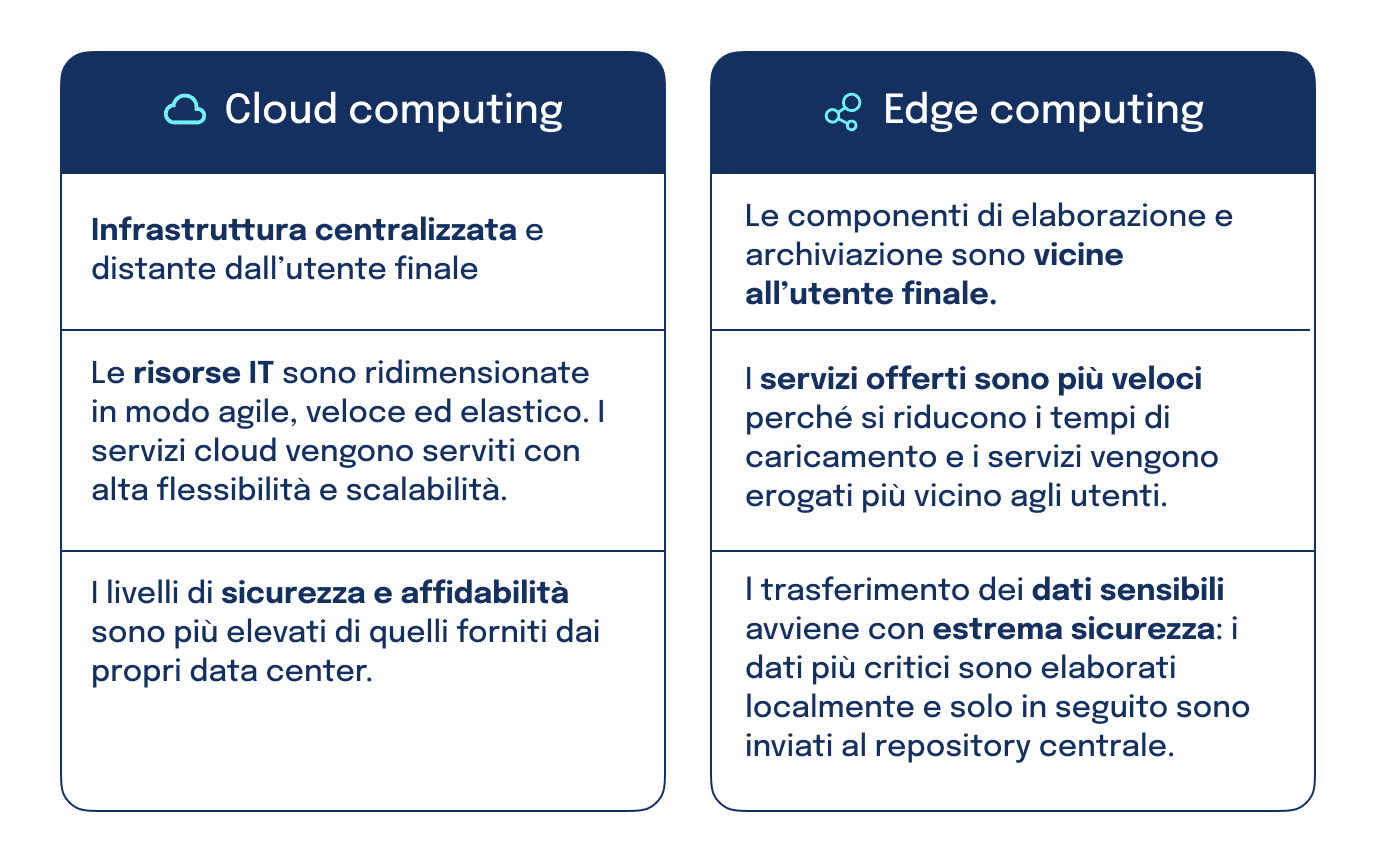
Before deciding which type of architecture to adopt, it is necessary to balance latency and computational capacity, based also on the specific needs of the project. To do so, it is important to compare cloud and edge computing and know the features of each approach. We have summarised them below:
The applications of cloud and edge computing
Both cloud and edge computing have a significant impact on a wide range of sectors and applications, allowing greater flexibility, improved performance and new opportunities for technological innovation.
Cloud computing has revolutionised numerous sectors, offering scalable data storage, computing power and on-demand services. Companies use this approach to host web applications and services, manage large volumes of data, run advanced analysis and deliver services based on artificial intelligence and machine learning.
On the other side, edge computing is applied in real-time scenarios, such as IoT, telemedicine and smart manufacturing, but also automotive and gaming, allowing a delivery of more responsive and reliable services.
The future challenges of cloud and edge computing
While cloud and edge computing continue to define the technological landscape, new challenges and opportunities for the future are taking shape. With the growing adoption of technologies such as IoT, augmented reality and autonomous driving, but also the evolution of communication networks, the demand for real-time data processing is becoming more and more important. This raises questions about how to balance the distribution of computation between the cloud and the edge, while guaranteeing the security, reliability and efficiency of operations.
With continuous innovation and the adoption of hybrid approaches that combine the strengths of cloud and edge computing, it is possible to tackle these challenges effectively, opening new frontiers in data processing and technological innovation.
If you want to find out how cloud and edge computing can optimise your operations, the dotenv team is at your disposal to create solutions tailored to the needs of your company.