What is the difference between a hacker and a cracker?
Between hackers and crackers the difference lies in the attitude they act with. A hacker puts their skills at the service of constructive aims (security, vulnerabilities to be found, a safer digital environment), and that is also where the name white hat comes from. A cracker uses the same abilities for illegal or harmful aims, without any permission.
Main differences between Hackers and Crackers
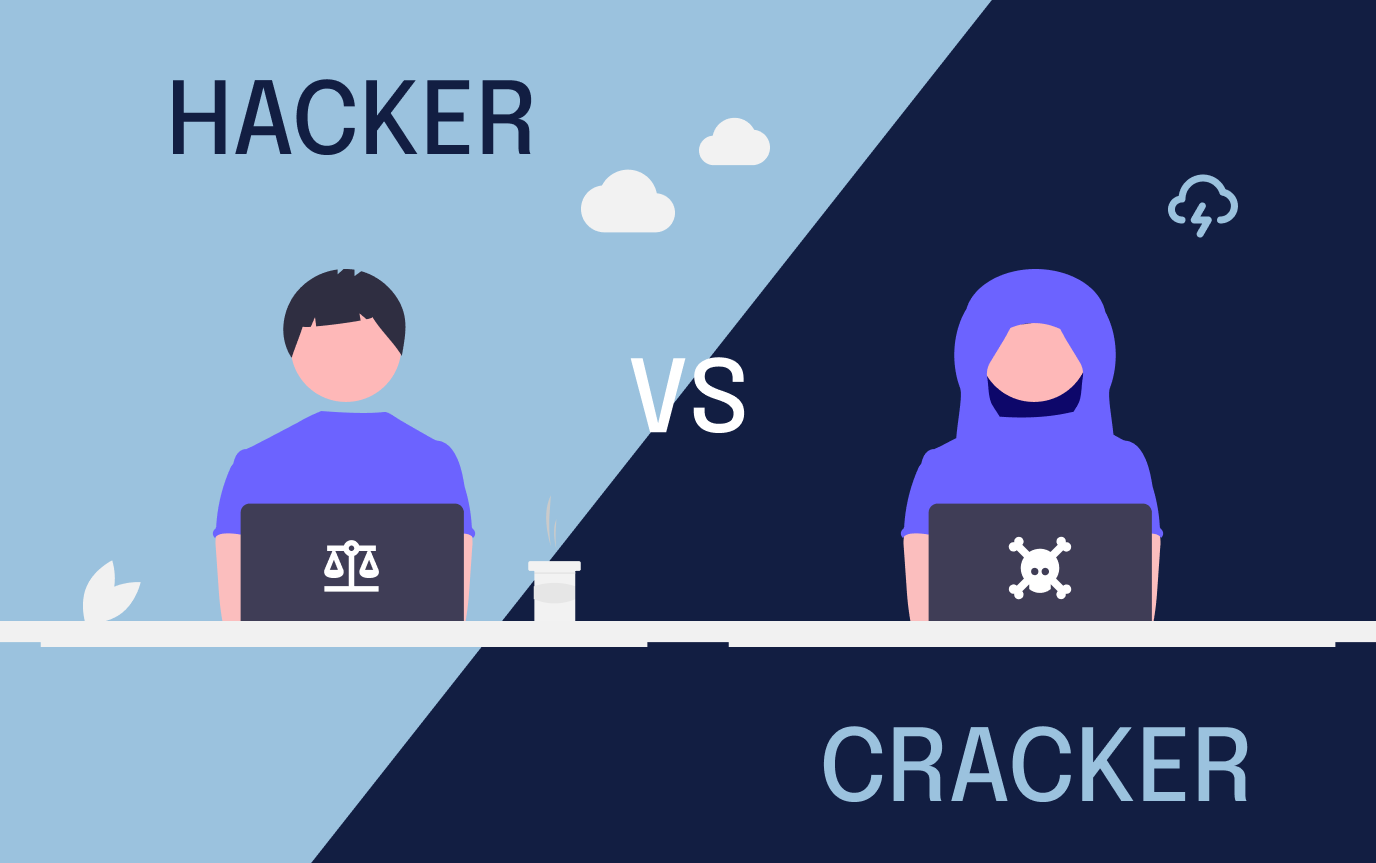
The main difference between hackers and crackers lies in the attitude with which they act. A hacker is often and wrongly called a “computer pirate” in a negative sense; in reality it is a sort of “digital watchman” with a great passion for technology and a deep curiosity about how computer systems work. Hackers enjoy exploring them in order to discover new flaws and find a way to fix them, increasing the security of a system.
Indeed, hackers’ goals are mainly constructive: improving security, identifying vulnerabilities and contributing to a safer digital environment.
The hacker ethic is based on principles such as the sharing of knowledge, freedom of information and social responsibility. Also known as “white hats”, they use their skills to improve cybersecurity, working with companies and organisations to identify vulnerabilities and suggest solutions. Ethical hacking is a legal practice that aims to strengthen computer systems and protect users from potential attacks.
In short, hackers are driven by a thirst for knowledge and by the will to overcome technological challenges.
By contrast, crackers are individuals who use their computer skills for illegal or harmful purposes. A cracker uses their abilities unlawfully and without any permission, trying to get into systems to profit from them. They are generally driven by the desire to steal sensitive information, cause computer damage or commit fraud for financial gain.
Crackers operate outside ethical and legal boundaries and are a real threat to cybersecurity.
Methods and techniques used by Hackers and Crackers

While hackers use a range of methods to identify and exploit vulnerabilities in computer systems, crackers adopt malicious techniques to breach cybersecurity. Hackers’ methods include:
✓ Penetration testing – a sort of authorised simulated cyberattack to identify and examine the system’s vulnerabilities and the possible consequences of an intrusion.
✓ Vulnerability analysis – Vulnerability Assessment means the process of identifying, quantifying and prioritising the vulnerabilities of a website or of an ICT infrastructure and of devices.
✓ Reverse engineering – it makes it possible to analyse the design of a part, in order to replicate it or make changes or improvements; through this process the product is “taken apart” to understand its architecture, structure and workings.
Through the use of specific tools, hackers understand how systems work and help to improve their security. On the opposite side we find crackers, with a whole series of malicious techniques.
✗ Social engineering – exploiting human weaknesses, it tricks people into sharing information they should not share, downloading certain software or visiting certain websites, thereby compromising personal or company assets or security.
✗ Phishing – it is the most common form of social engineering and consists of fraudulent emails, messages, phone calls or websites designed to induce people to download malware, share sensitive data or take other actions that expose them to cybercrime.
✗ Malware infiltration – this is malicious software able to sneak into computers, mobile devices and company networks without the user’s authorisation, in order to steal personal data, spy on victims and damage infected systems.
✗ DDoS attacks (Distributed Denial of Service) – this technique consists of bombarding a site or network resource with requests, overloading it with harmful traffic and thus making it unusable and unreachable.
Through targeted techniques, crackers’ main goal is to compromise systems and networks, steal sensitive data or damage other people’s computer resources.
Cybersecurity: knowing the threats to prevent them
Hacking and cracking activities can have a significant impact on cybersecurity and on users’ privacy. Cyberattacks risk causing financial losses, damaging companies’ reputations and putting the security of personal data at risk.
As a result, you need to protect yourself, understanding the risks and adopting solid security measures to mitigate these threats. These include the use of firewalls, antivirus software, data encryption, the implementation of security policies and, last but not least, user training, because awareness is fundamental to preventing cyberattacks.
Want to know more? dotenv can become your company’s software partner.