
Native app, web app or PWA: which is better?
Between a native app, a hybrid app, a web app and a PWA the choice depends on target, features, budget and time. To keep development time, launch time and costs to a minimum the web app is the best option; for a highly customised experience close to the device, native fits better. Hybrid apps and PWAs sit in between.
Back in the now distant 2008, Italy met the iPhone, a year after its official unveiling. It was not the first touchscreen phone, but it was the first to revolutionise human-machine interaction once again, radically changing our everyday lives. From that moment on, the world of apps began to come to life. But how do you choose the right one for your business? Scroll down to find out!

The LG Prada was the first phone with a capacitive touchscreen but, unluckily for it, a month later Apple unveiled the iPhone to the world.
Terms such as app, scroll, swipe and tap already existed, but they became part of everyday language thanks to the impact smartphones have had on our lives, and today this cannot be ignored when you build a business and want to reach people with your products and services.
Just think of how we use our devices: today the smartphone is far more accessible than a computer compared with the past, when, between “standard” phones and PCs, the latter was the only way (or the most convenient one) to get to the news, home banking and work communications. The smartphone has taken over, and we expect to be able to do everything in a few taps.

So does every business absolutely need an app? No, it is not that obvious, but limiting yourself to a website that only displays properly on a PC, as was the case 15 years ago, is certainly no longer enough today.
Before choosing an app, web app or PWA: the main platforms where your users are
Before going into the different solutions and the aspects to weigh up, let us introduce the main platforms that need to be considered:
- Desktop (laptop or desktop PC)
- Smartphone
- Tablet
These are the most widespread, and the ones you should definitely keep in mind when deciding what to build. The first mistake is wanting to be on every platform without considering the service on offer. The choice must be weighed against the target audience and the features required.
Take two social networks such as Facebook and Instagram. The former was born in 2005, before the smartphone came into common use, and was built with the aim of being used from a desktop. Instagram, by contrast, was designed for smartphones from the very start, since it needed a camera to create content.
Both can be reached from any device, but the user experience is very different depending on the platform used.
Another common mistake is thinking that “smartphone” automatically means “app”, when in fact an application is not always necessary to be reachable from a phone or tablet.
App, web app, PWA: the solutions compared
If you want to offer a digital service, you have several options to choose from. So let us look at the most common ones when you want to build cloud software:
- Native application: it is developed specifically for a specific operating system (Android or iOS), using that platform’s own languages and tools. It offers the best possible performance and a user experience optimised for the device in use.
- Hybrid application: it combines web technologies (such as HTML, CSS, JavaScript) with the device’s native features. It uses frameworks such as Cordova, React Native, Flutter to let web code interact with the device’s functions, offering a compromise between native and web applications.
- Web app: accessible through a web browser on any device. It needs no installation, but its features may be limited compared with native or hybrid apps. It offers immediate updates with no need for distribution. Native apps exist for Windows, macOS and Linux too, but for cloud solutions it is far more common to build a web app directly. [Find out here how to build a web app for your company]
- Progressive Web App (PWA): a web app that uses modern web APIs to provide an experience similar to that of a native app. PWAs can work offline, send push notifications and can be added to the home screen of smartphones and tablets like a native app. They are flexible and can reach a broad range of users with a single source code.
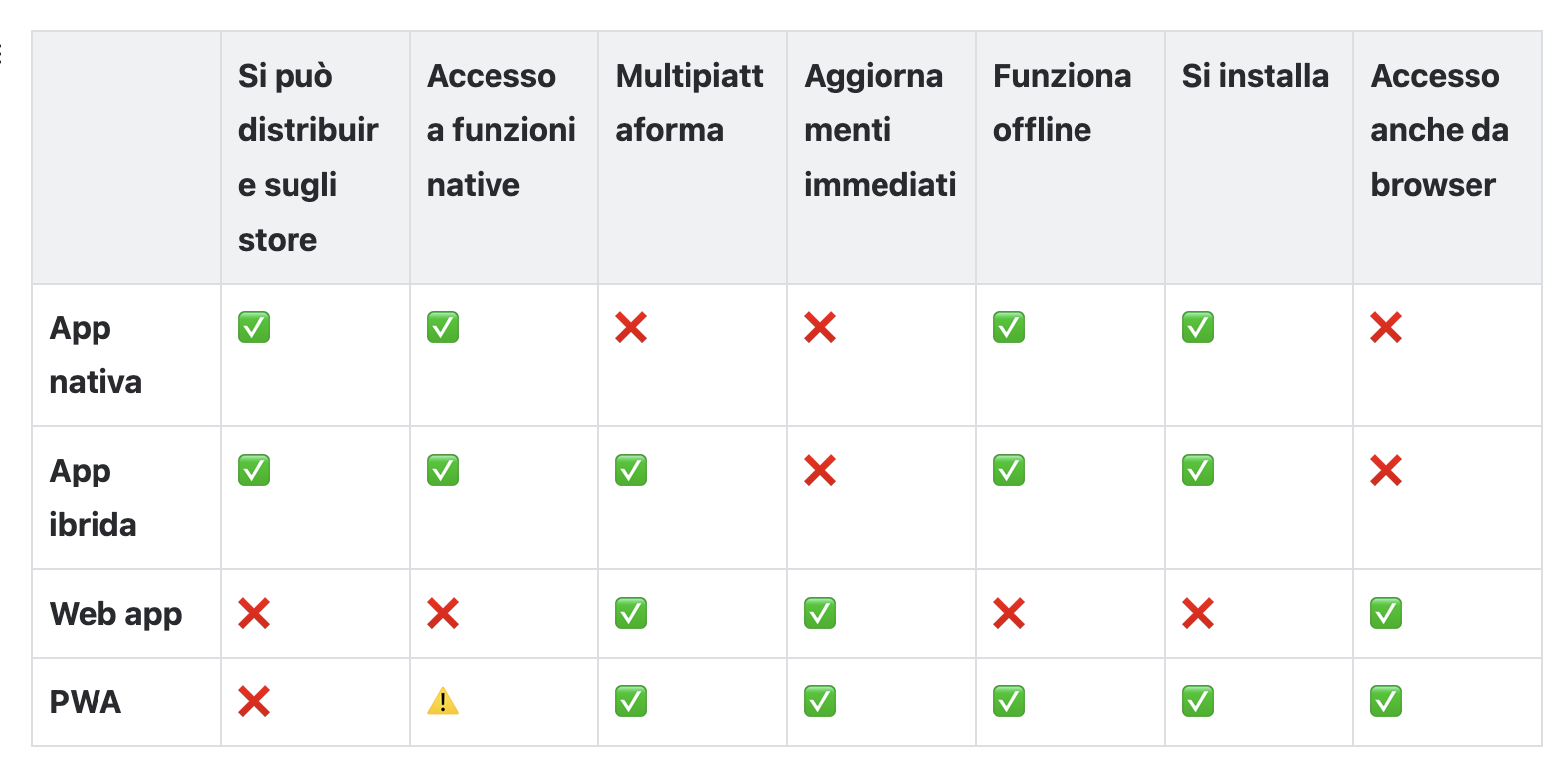
This is actually a simplification, since some aspects also depend on the type of technology used for development, but it helps us get a picture of the differences to guide the choice.
To simplify drastically, if you want to minimise development time, time to go live and costs, the web app is the best option. Conversely, if you want an extremely customised experience, with access to all the features of the chosen platform, native software is more suitable and leaves you complete freedom of implementation.
Hybrid applications and PWAs sit in the middle, without forgetting that, as mentioned at the start, you can also work on more than one option if the choice comes from a careful analysis that puts the user experience at the centre.
One of the main advantages of hybrid solutions and web apps, PWAs in particular, is the ability to develop the code once and distribute it across several platforms, thereby reducing both development time and costs. But as everyone knows, all that glitters is not gold.
Cross-platform development: pros and cons
By “cross-platform development” we mean hybrid applications, web apps and PWAs, solutions that let you create a single codebase that can be distributed across several platforms.
Let us first look at the advantages of this approach:
- A single codebase: as mentioned, with technologies such as React Native and Flutter for hybrid apps, or HTML, CSS and JavaScript for web apps, you can write code that works on different devices and operating systems. This means that with a single codebase you can cover both iOS and Android, and desktop browsers as well.
- Lower costs: maintaining just one codebase significantly reduces development and maintenance costs, since there is no need to maintain separate versions of the software for each platform. Changes and updates are applied only once and are immediately available on all platforms.
- Time to market: using cross-platform frameworks speeds up development time, making it possible to bring the product to market more quickly. This is crucial in a context where the speed of innovation can make the difference.
- Consistency of the user experience: since the underlying code is the same, it is easier to keep a consistent user experience across the different platforms, even though there may be small variations due to the specific interfaces of the devices. Note: we will come to this aspect shortly, as it is fundamental to the choice between the hybrid and the native approach.
However, it is important to consider the limits as well:
- Performance: native apps generally offer better performance than hybrid or web solutions, since they are optimised directly for the device’s hardware and operating system. Today, however, there are frameworks for hybrid development that let you use native components, mitigating the performance problems.
- Access to native features: although hybrid solutions and PWAs are improving quickly, there are still features specific to each platform that may not be accessible, or may take more work to implement.
- Differences in the user experience: if the user experience varies from one platform to another, cross-platform development may require specific adaptations, losing part of its advantages. Even so, it still offers the flexibility to handle different navigation flows, although they need to be developed separately.
Ultimately, the choice between developing a native solution, a hybrid one, a web app or a PWA depends on various factors such as the target users, the features required, the budget and the time available.
If your goal is to reach as many users as possible with a minimal investment in development time and resources, especially if the differences between platforms are minimal, hybrid solutions and PWAs offer a very advantageous compromise.
However, if the app needs high performance or full access to the device’s native features, a native solution might be the best choice.
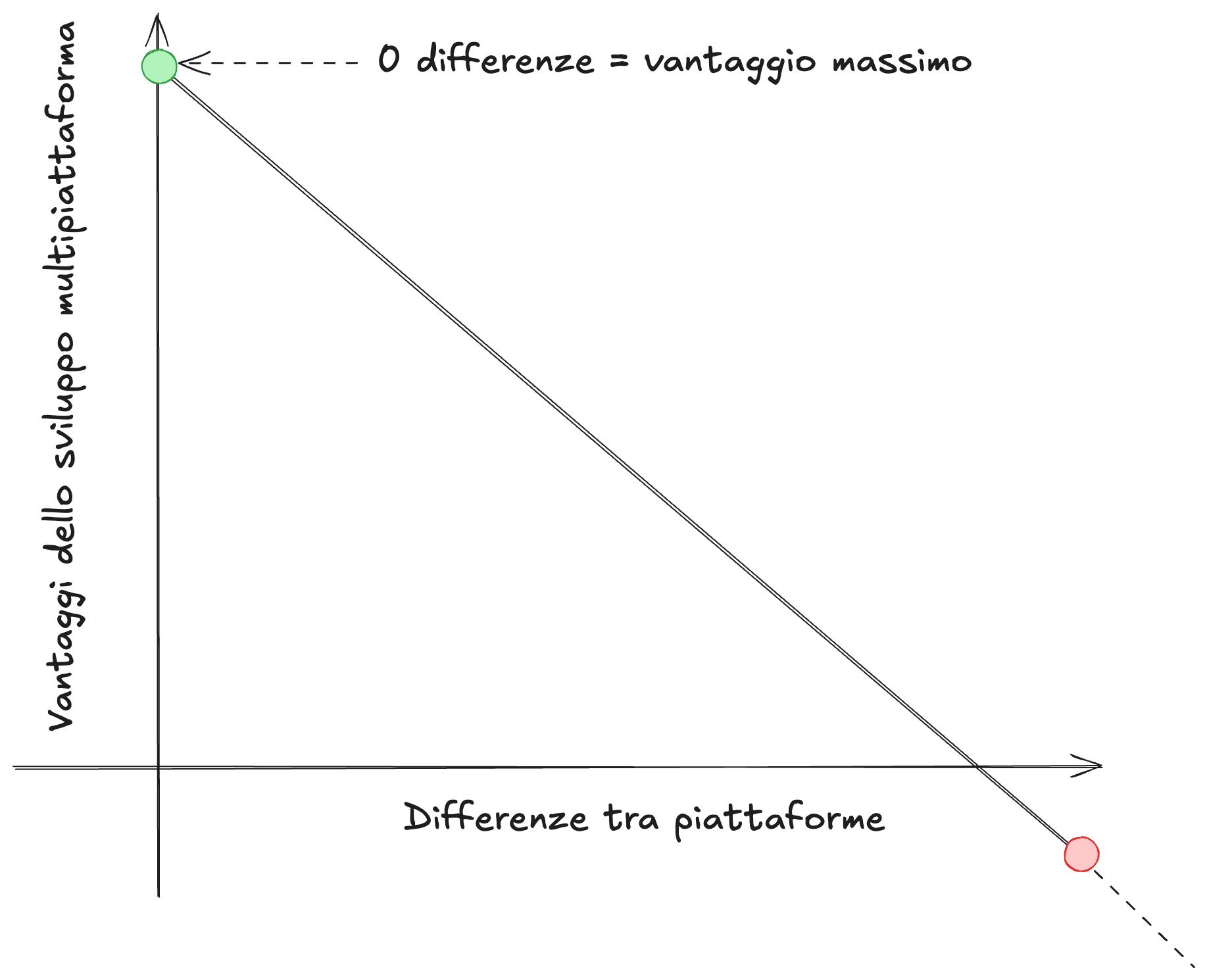
Cross-platform development is particularly advantageous when the differences between platforms are minimal. As those differences grow, however, the benefits shrink until they turn into disadvantages.
Flipkart, the Indian e-commerce giant, tripled the time users spend on its site thanks to a Progressive Web App (PWA), showing how effective this solution can be for reaching a vast audience quickly.
By contrast, Pokémon GO, the famous mobile game that a few years ago won over thousands of players with its augmented reality, was developed as a native app for Android and iOS, focusing on exceptional performance and an experience without compromise.
Both approaches are valid, but the key is understanding what your business really needs. A careful initial analysis is the best investment for identifying the most suitable solution, making informed decisions and moving forward with confidence, avoiding regrets.
Have we convinced you? If so, or even partly, have a chat with us.